This page presents three UX research projects that I have designed, conducted, and led from incubation to insight delivery, across academia and industry. All of them have all led to publications, talks in major conferences, tech prototypes and/or design innovations.
Project One: Facilitating Informal Communication with BlendZoom
Created and tested a tech prototype, based on insights from user interviews.
Project Two: Improving Non-Native Speakers’ Participation with an Automatic Agent
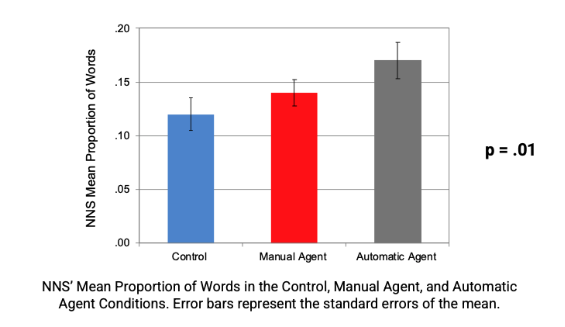
AI agent increased participation of Non-Native speakers by 40% of all words spoken;
Insights led to influential talk in ACM conference, news coverage and podcast.
Project Three: Investigating User Needs and Innovating Design of Hybrid Meeting Technologies
Field studies & interviews led to an innovative framework with actionable design implications.
Context
In an in-depth interview study diving into user behaviors and desires, I discovered an unmet user need in having remote informal interactions.
When people attend social gatherings or interact before/after meetings, they often talk in small groups, but 1) can overhear other groups, and 2) have the option to switch to another group conversation when desired.
However, the opportunity to spontaneously switch between smaller groups is not well supported by current remote technology.
Three Features of Prototype: BlendZoom
Awareness (real-time video, keywords, sentiment analysis) + switch button;
Awareness (real-time video, keywords, sentiment analysis) + invitation;
Awareness (real-time video, keywords, sentiment analysis) + virtual drink.
Testing the Prototype
Awareness
Example survey question: Thinking about the other breakout room on the right that you just saw from the prototype, how much were you aware of what they were talking about?
Choose from 1-7: 1=not aware at all; 7= extremely aware
Switching motivation
Example survey question: If you were in a group conversation in a social gathering, how much would you be motivated to switch to the other group conversation in feature one (switch button)?
Rate from 1-7: 1= least motivated; 7= most motivated
Liking of other group
Example survey question: How much did you like the other group?
Rate from 1-7: 1= least; 7= most
Rudeness
Example survey question: How rude do you feel it would be if you switched to the other group?
Rate from 1-7: 1= least; 7= most
Liking of features
See an interactive demo of the prototype here!
Solution: Blending Cross-Breakout Interactions
Providing awareness of what is happening in another small group conversation through:
Real-time video,
Keywords,
Sentiment analysis;
Options, motivations or excuses to switch groups without being rude.
One Minute Video Introducing Three Features of Prototype
What Did I do?
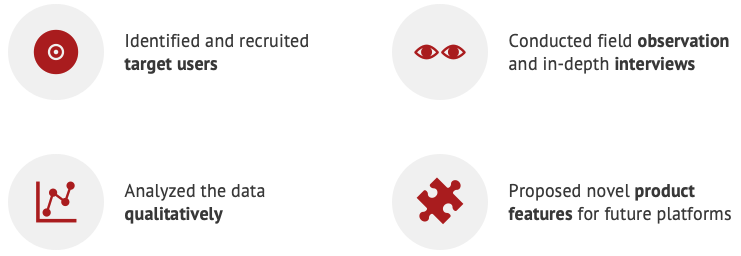
Independently designed end-to-end research, conducted in-depth interviews to explore issues, creative efforts and unmet user desires.
Led a team of researchers to create a prototype that facilitates freeform small group conversation switch during Zoom breakout discussion, integrating the interview insights.
Conducted concept and usability tests to evaluate the prototype and inform future product design decisions.
Project One: Facilitating Informal Communication with BlendZoom
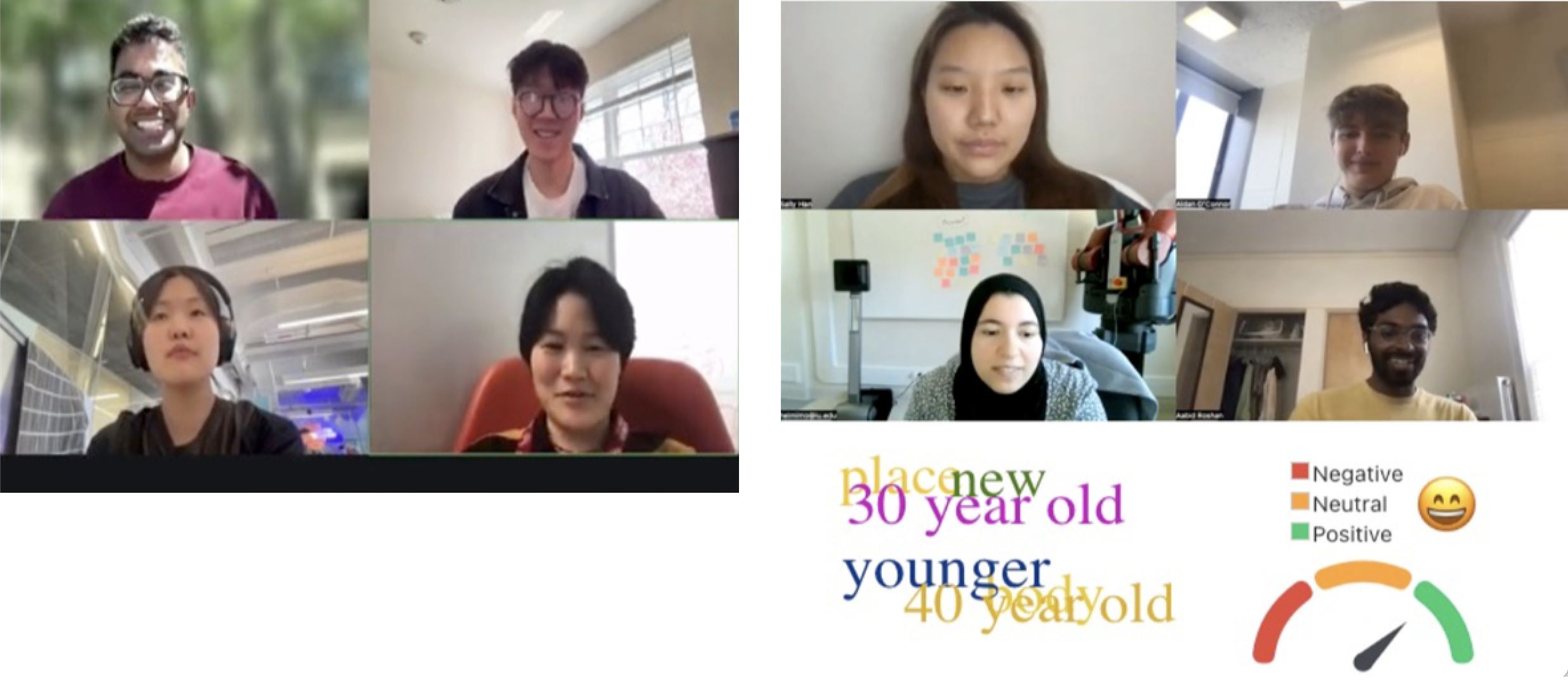
BlendZoom: Providing the Option to Naturally Switch to Another Group Conversation
Project Two: Improving Non-Native Speakers’ Participation with an Automatic Agent
Context
Multilingual groups offer diverse perspectives and expertise that are crucial for organizations.
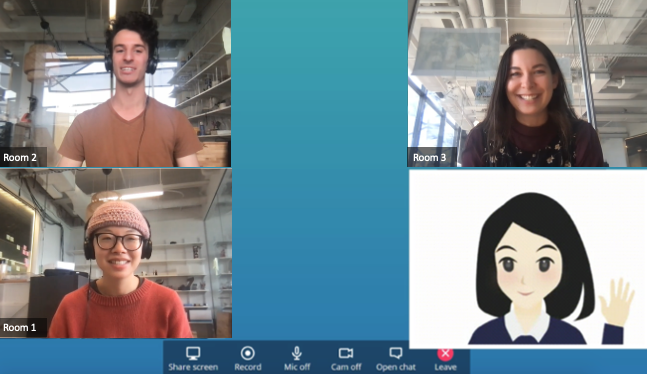
The use of a common language can create communication issues between Native Speakers (NS) and Non-Native Speakers (NNS).
Previous solutions failed to provide clear instructions and/or motivations for behavioral adjustments.
What Did I do?
Led end-to-end research and collaborated with cross-functional team to design a smart conversational robot, increasing participation of Non-Native speakers by 40% of all words spoken.
Designed quantitative experiments, created Qualtrics surveys and proved the effect of the conversational robot.
Conducted in-depth user interviews and generated actionable product design implications.
Published and presented ACM research article, which led to news coverage.
More details about this project.
Impact
Increased participation of Non-Native speakers by 40% of all words spoken.
Research insights directly employed to a new generation of conversational agent under development.
Reached wider audience through effective communication.
Published and presented in large ACM conference and led to interdisciplinary discussion;
Received news coverage by Cornell Chronicle and department;
Spoke in a podcast at the Language Resource Center @Cornell.
Goals
Use technology to facilitate more balanced communication in multilingual groups.
Prove effectiveness of the technology with quantitative experiments.
Gather user feedback with in-depth, qualitative interviews to inform design of future platforms.
Project Three: Investigating User Needs and Innovating Design of Hybrid Meeting Technologies
Context
-
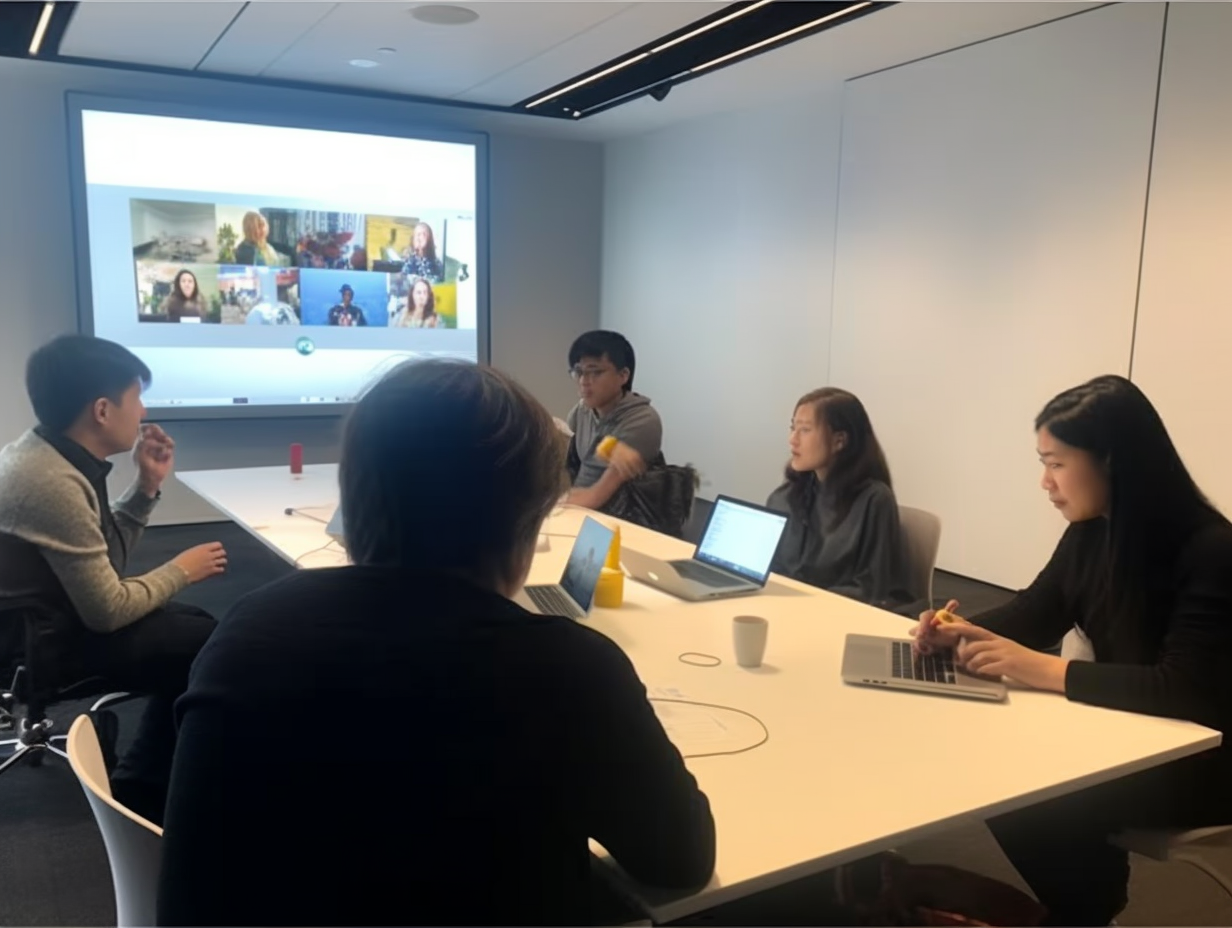
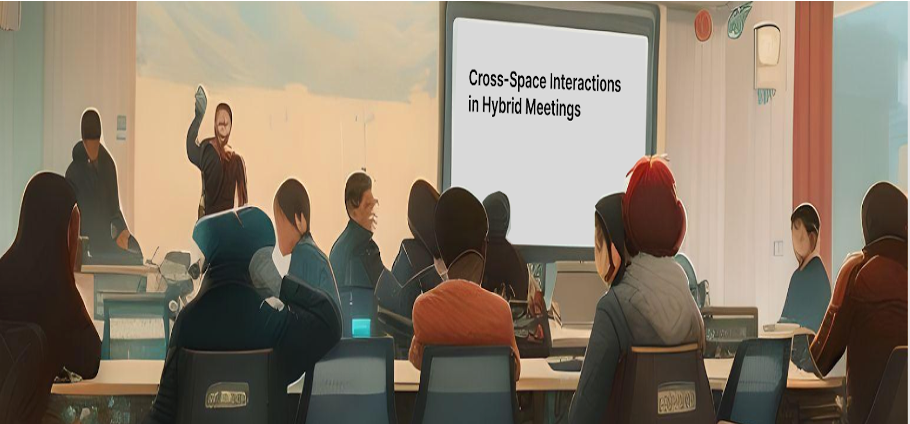
Hybrid meetings are video or audio-based communication sessions among co-located and remote participants.
-
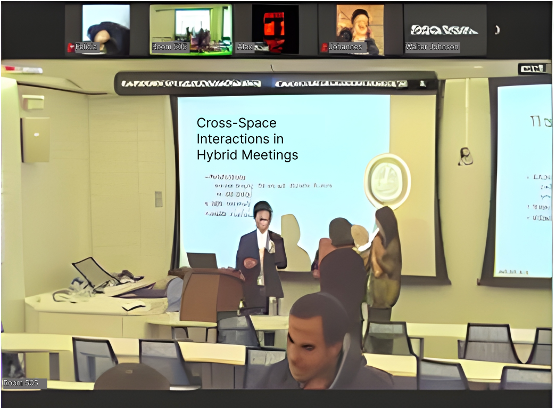
The prevalence of hybrid meetings has brought benefits and unique challenges.
-
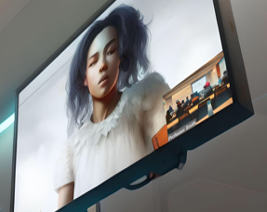
Communication in hybrid meetings is often segmented by space.
Existing Issues
Cross-space interactions, wherein in-person and remote attendees engage with each other, are less smooth and frequent.
Why?
Current popular technology originally designed for fully remote communication.
Physical conference rooms primarily built for fully in-person meetings.
Data Collection and Analysis
Observations
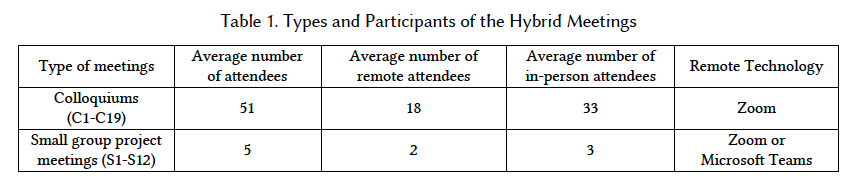
Large colloquiums with an average of 50 attendees in a large university;
Small-group, task-oriented project or planning meetings.
In-Depth Interviews
To uncover underlying reasons for behaviors that we were not able locate based on the observation data alone.
Data Analysis
The lead researcher (me) open-coded the data in ATLAS.ti to create 45 initial codes from the observations and 46 from the interviews. Two other colleagues were then invited to discuss the codes as a group and create the final themes.
Pain Points
Example: Imbalanced Conversational Power
Contrary to previous work, which highlighted collocated participants dominating meetings, we found participation was largely determined by where the conversational power resided.
Number of attendees was an important factor affecting conversational power. The medium that has more attendees holds the power of speaking and influences behaviors of those from the other medium.
More on Design Implications
See explanations of these design implications on the right.
What Did I Do?
So What?
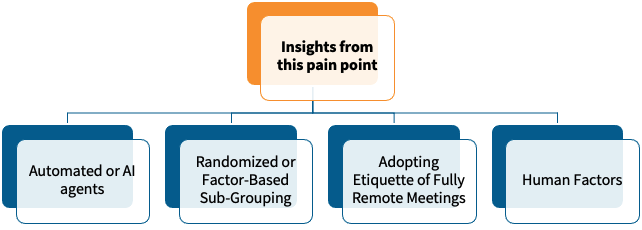
Automated or AI agents
Designed to choose the right time and naturally diverge attention to remote attendees when needed.
Randomized or Factor-Based Sub-Grouping
Address challenges related to awareness and co-presence by delivering only a view of a smaller group of in-person and remote attendees across space.
Adopting Etiquette of Fully Remote Meetings
Organizations can mitigate the power differences by adopting a remote culture and making it more effortless to shift people’s attention to the remote modality.
Human Factors
Coaching human facilitators and attendees.